

The Autonomy of Storytelling: How It Was Lost and How We Get It Back
GRAMMA Strategy Part 4: The Third Principle - MARKETING AUTONOMY

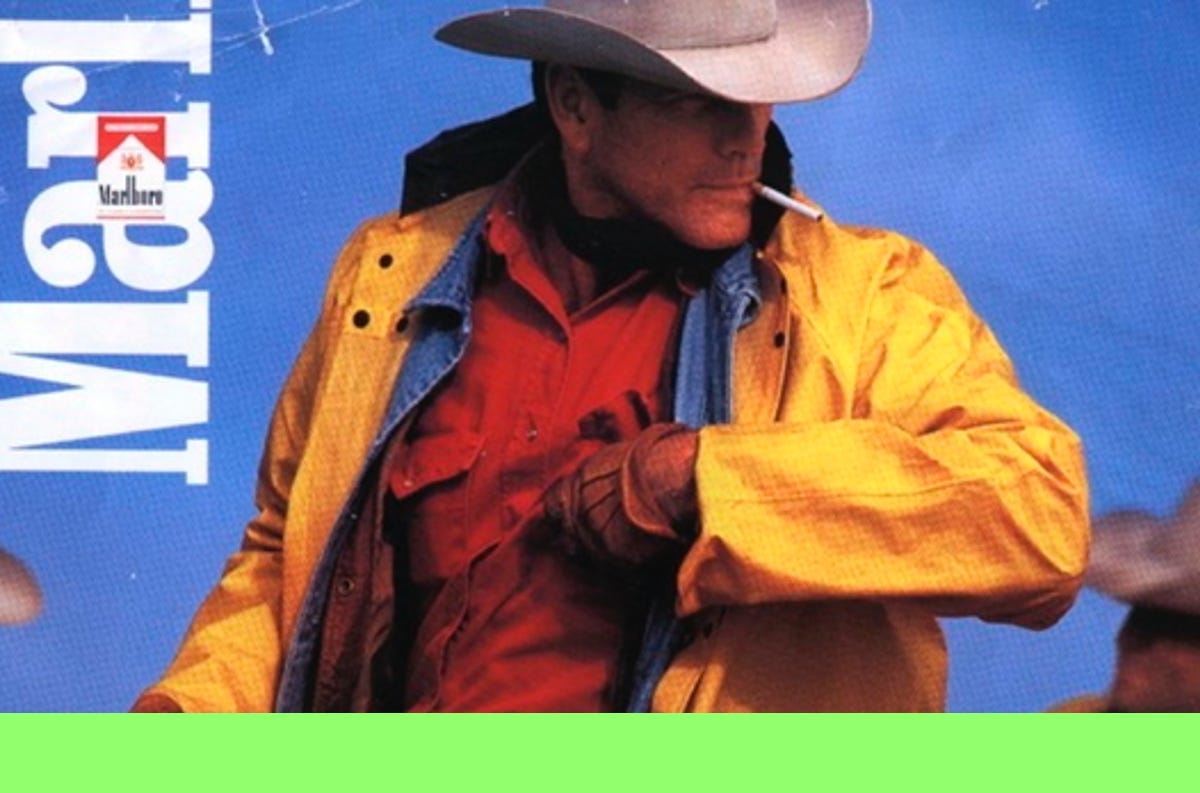
Does anyone still remember the Marlboro Man? Of course, we do.
Sure, the product was awful, but the commercials made people feel good. Through the power of autonomous storytelling, the ritual of smoking was connected to the ideas of freedom, adventure, patriotism, rugged individualism, and the great outdoors.
Why can't we have the same type of storytelling in sustainability? It is a provocative question, but in this piece, I will show you that modern and ethical storytellers have a thing or two to learn from the Marlboro Man. So again, why can't brands inspire people to take up eco-friendly habits in the same way Marlboro 'inspired' them to smoke?
Because storytellers are no longer given strategic autonomy. Imagine if the creatives at Leo Burnett — the agency behind the Marlboro Man — had been told to keep their creativity to themselves and focus solely on the product: the tobacco blend, where and how it was grown, the paper, the packaging. The iconic campaign would never have existed.
Unfortunately, that's how sustainability communication usually works today. Instead of imagining new green rituals and inspiring people to adopt sustainable lifestyles, brands bore us with narcissistic and misleading stories about their own green deeds (eliminating plastic, shifting to clean electricity, reducing carbon emissions, etc.). That is not autonomous storytelling — that’s puppeteered storytelling.
To understand why this creative downfall happened and how the autonomy of storytelling can be regained, we will need to establish some context.
Dissecting the Sustainability Debate
The sustainability debate is a confusing one. Concepts like CSR, ESG, Sustainability, and Regeneration complement each other but also compete and encroach upon each other's definitions. While companies are grappling with the dueling pressures to do business sustainably and to maximize profits, the notion of 'responsible business' remains a site of profound political, cultural, and regulatory contention.
If you add communication into the mix, it gets really perplexing. Is communicating environmentally responsible upgrades of business processes a necessary component of sustainability or, conversely, a self-defeating one? Is there a middle ground between greenwashing and greenhushing?
I believe that cutting across all this confusion is a very simple dichotomy between business and marketing. Sustainable value can be created on both sides of the dichotomy: corporate sustainability on one side and sustainability marketing on the other. Corporate sustainability - how sustainably companies are run - is unquestionably the more important of the two for the future of our planet.
However, if given autonomy, marketing can also play a huge role by opening up a new authentic space for sustainable value creation through promoting behaviour change on a mass scale.
Puppeteered Storytelling
Progress in sustainability suffers when such autonomy is denied and when 'corporate sustainability' and 'sustainability marketing' categories are confused or conflated into one. Let's say a company is accused of greenwashing because of its disingenuous claims about carbon neutrality, sourcing of materials, or use of renewable energy. Fundamentally, what is being attacked in such cases are the shortcomings of corporate sustainability. But it's marketing that usually takes the blame.
Admittedly, it is also a testament to the decline of the rich tradition of marketing that, when it comes to sustainability, it is usually tasked with merely parroting (or falsifying) what's being done on the factory floor.
At its worst, this genre produces sleep-inducing corporate videos showing a spinning planet and listing promises to harm it a little less next year. When it's more creative, it produces commercials like the two examples shared here from United Airlines and Apple.
Both campaigns have been criticised as misleading and bordering on greenwashing. But, even more crucially, they are examples of puppeteered storytelling — of autonomy denied. Company leaders running corporate sustainability are the puppeteers, and the marketer is the puppet, box-checking what serious people in the boardroom have to say. Or simpler yet: a parrot.
These commercials are structured as narratives but function more as lists of claims, thinly veiled behind fictional characters like Mother Nature or Oscar the Grouch. A real story engages and empowers others. These two campaigns fail to engage because they’re too focused on themselves. I've explored this in more detail in my review of Apple’s ‘Mother Nature’ ad, published in The Branding Journal.
These ads result from companies looking inward and misusing marketing to report (or spin) the findings and projections of sustainability teams and other departments. They don’t include the people by showing how they can participate. So why should anyone care?

Autonomous Storytelling
Conceptual clarity is regained, and confusion is avoided once we embrace the principle of marketing autonomy (or the autonomy of storytelling). Autonomous marketing is not self-referential and narcissistic. It is outward-looking and empathetic. Real marketing is not the rewording of what people in the boardroom have to say about internal business processes. It is creating new ways of perceiving the world and being in it.
Some context for new readers. This is the fourth article in a series developing the GRAMMA model — a framework for creating authentic, behavior-shifting sustainability campaigns. Marketing Autonomy is the third, and final, principle of the GRAMMA model. The first article introduced GRAMMA, followed by deep dives into the Gatekeeper Role and Actionable Magic.
The GRAMMA model focuses exclusively on the possibilities of creating sustainable value through autonomous marketing. The strategy works best if creatives are not burdened with internal business information (sourcing, manufacturing, transportation, etc.). Instead, let them focus exclusively on the end-products and other brand touchpoints.
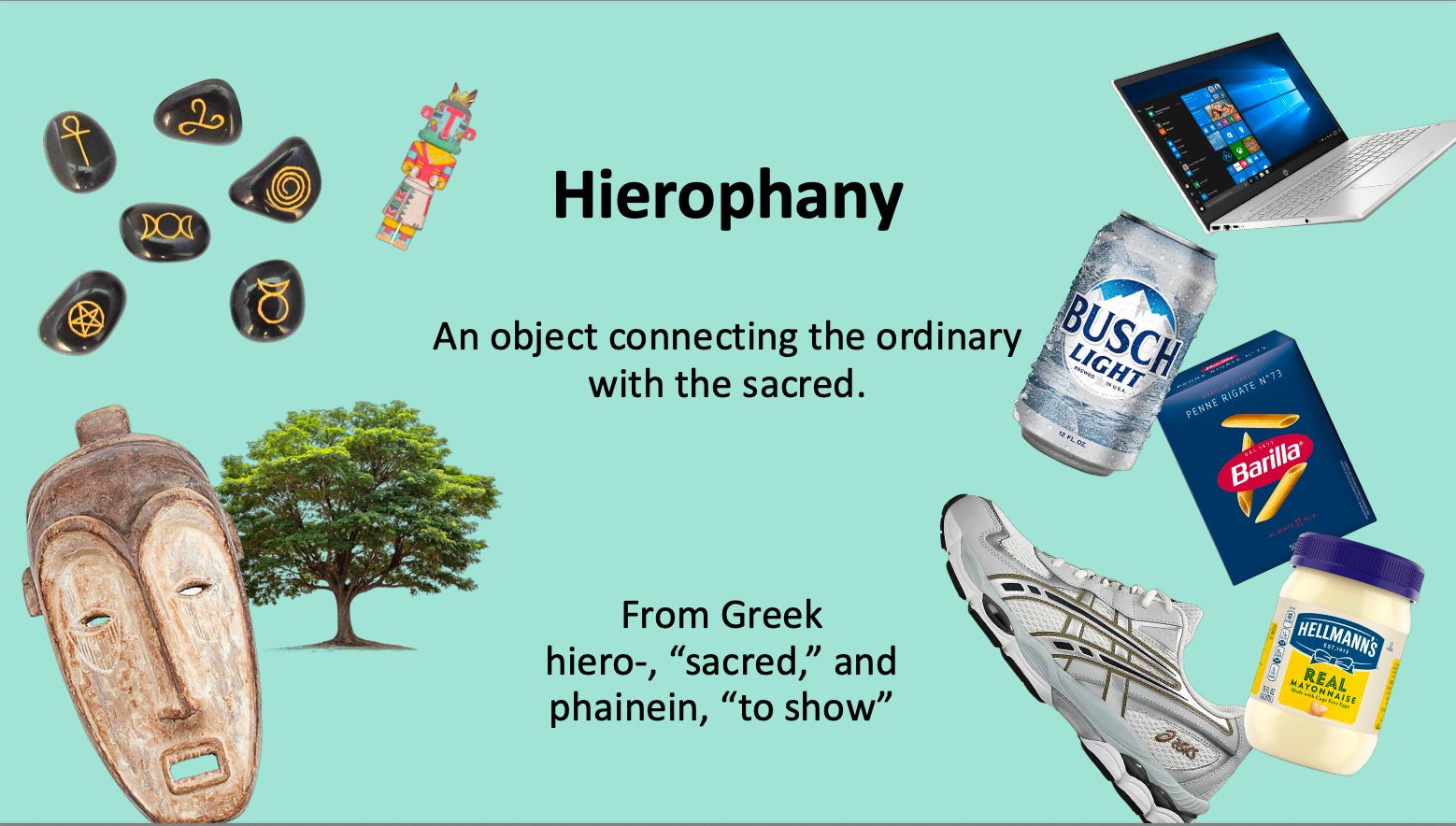
How these objects came to life is a valid concern — for other departments. The task for branders and marketers, however, is to take them for what they are — 'profane' everyday objects — and reveal to people their other side as 'sacred' objects of planetary sustainability. That's how fantastic campaigns like Hellmann's "Make Taste Not Waste," Barilla's "Secondhand Box," or Nescafe's "80°C" came into being (all discussed in detail in the previous articles). They are all great examples of the autonomy of storytelling.
The Evolution of Marketing
Here's another example. 'A Case Against Space’ campaign by Busch Light builds a fascinating story built around the scientific reality that zero gravity transforms beer into a foamy mess, rendering it undrinkable outside planet Earth.
As someone who experienced the horror of life without beer, retired NASA astronaut Doug Hurley sends us a sobering warning: “Because we can’t drink this up there, so let’s preserve what we have down here in the name of beer”.
While drinking beer won’t save the planet (despite all the donations made by Busch Light to ‘One Tree Planted’), the story prompts reflection and motivates beer lovers to act differently. Much like the Marlboro Man connected seemingly unrelated ideas of smoking and freedom, Busch Light aims to connect beer drinking rituals to a sustainable mindset.
Just like Mad Men-style marketing that was so influential in shaping mass behaviour, GRAMMA-style marketing can do the same, but with ethical goals in mind. To better understand the evolution of brand storytelling, I propose using a 2×2 matrix where the letter N shows the direction of evolution.
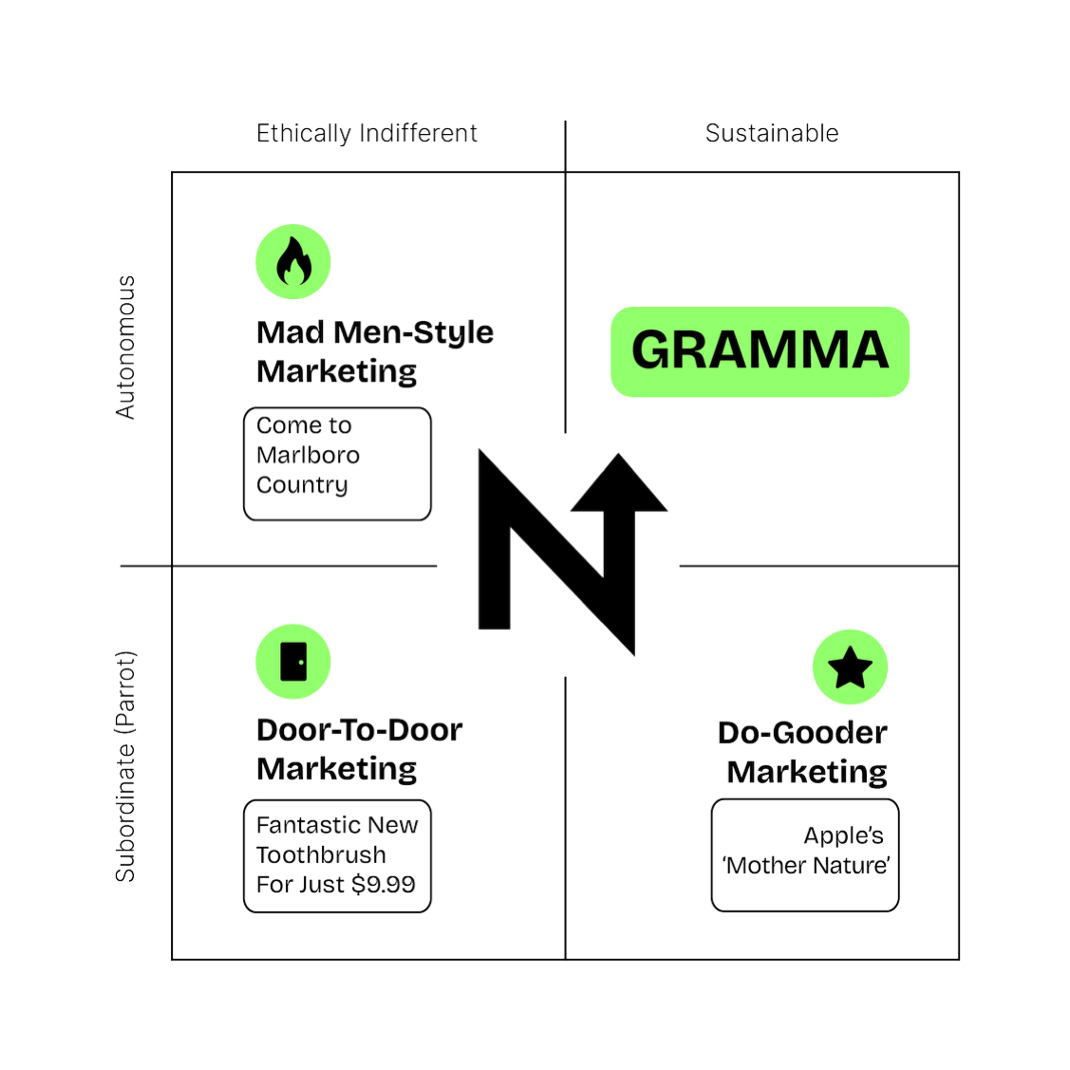
By seeking a clean break from the morally questionable content of mad-men style marketing, do-gooder marketing also gives up the ambition to deeply impact consumer behavior (as seen in examples from Apple and United Airlines). Instead, it retreats to the self-referential stage of marketing: just like a door-to-door salesman would tirelessly list the “remarkable features of this new fantastic toothbrush”, do-gooder marketing is reduced to itemizing the company’s good deeds. With GRAMMA, we finally have the right formula: autonomous storytelling serving sustainability and enriching people’s lives in the process.
New Synergy
As we’ve already established, corporate sustainability and GRAMMA-style sustainable marketing can (and usually should) create sustainable value independently of one another. But a new synergy is also possible. The "Lenovo Precious Metals" campaign from 2022 is a case in point.
To promote its B2B e-waste recycling program Asset Recovery Services (ARS), Lenovo could have disregarded marketing autonomy and employed the tired 'do-gooder' strategy (explaining how great their recycling efforts were for the planet). Instead, the tech company partnered with Australian sustainable jeweler Holly Ryan, who designed four luxurious rings made of gold, platinum, and silver recovered from end-of-life hardware.
Tangible and artistic manifestations of the principle of circularity, these one-off jewelry pieces are modern hierophanies — everyday objects reimagined as ‘sacred’ links to sustainability — used to engage B2B clients creatively.
By relying on Lenovo's ARS, clients are doing the rational and the sustainable thing, but also the magical thing (transforming e-waste into sustainable jewelry). Marketing autonomy is preserved because, instead of being puppeteered by corporate sustainability, the "Precious Metals" campaign works independently to bring new hierophanies to life and boost client motivation to participate in Lenovo's ESG program.
Marketing Autonomy: Key Takeaways for Application
· It may seem counterintuitive, but to create impactful campaigns, companies need to set aside their own 'green deeds'.
· While internal pressure will always exist to use marketing as a mere corporate sustainability mouthpiece, leaders must resist it.
· Let marketing get wild in creating sustainable value autonomously
· Consider: where does your corporate sustainability end, and where does sustainability marketing begin?
· How can you manage them independently without missing synergy possibilities?
· Don't let other departments boss marketing around. Protect the autonomy of storytelling.

GRAMMA Strategy Part 1: Introduction
GRAMMA Strategy Part 2: Gatekeeper Role - The First Principle
GRAMMA Strategy Part 3: Actionable Magic - The Second Principle
GRAMMA Strategy Part 5: Conclusion (Coming Soon)
Buy Me a Coffee
If this post resonated with you and you'd like to support my work, consider buying me a coffee. I promise not to spend it on Marlboro.
This is one of the most compelling arguments I’ve read for why sustainability marketing falls flat—and how to fix it. The Marlboro Man as a blueprint? Unexpected and brilliant.
This is such a sharp and timely piece — I loved the clarity with which you dismantled the confusion between sustainability marketing and corporate sustainability. The Marlboro Man comparison is brilliant: provocative but exactly the kind of narrative jolt we need to understand what’s missing from today’s eco-communications. The GRAMMA model was new to me and seems that is shaping up to be a powerful framework, and this piece makes a compelling case for why marketing deserves its own strategic seat... not as a translator of corporate actions, but as a catalyst for cultural change.